A Green Witch’s Guide to Ingredients in Skincare vs Chemicals in YOUR Everyday Skincare
Hidden Chemicals in Your Everyday Skin Care: Why I Chose the Herbal Path
As a master herbalist, I’ve long understood that true beauty isn’t about covering up. It’s about radiant health – a deep, inner glow that shines through. But I haven’t always lived this way. For years, I, like many of you, used drugstore makeup and thought little of the ingredients. Now, as I live on my homestead, growing our food and healing with the land, I see a clear, undeniable truth: the chemicals in our everyday products are a modern riddle, and the answer is rooted in nature.
The makeup aisle is filled with beautiful promises and even more complicated ingredient lists. I used to be able to get by with just a few basic products for special occasions. But as I dove deeper into the art of botanical skincare, I realized that even a simple foundation could be a cocktail of chemical nasties, often listed in a language we can barely pronounce.
From Pinterest Pins to Apothecary Rituals
My journey started with curiosity: “Will this herb help with redness?” “Can I use this root for sun protection?” I dove into research, recipes, and rabbit holes — and yes, Pinterest was a frequent stop. But what began as a hobby quickly became a calling. Herbalism isn’t just my business — it’s my therapy, my ritual, my rebellion against the chemical overload in mainstream beauty.
The Truth Lurking in Your Products
My journey started with a simple question: What are these ingredients doing to my skin? What I found was startling. A single, high-end foundation I once used—at a staggering price—contained over thirty ingredients. While some were natural, a majority were not, and the difference was a stark reminder of the path I had left behind. Consider these common culprits found in many conventional skincare and makeup products:
Parabens: Look for ingredients ending in -paraben (e.g., Methylparaben, Propylparaben).
These are often used as preservatives but are known to mimic estrogen, potentially disrupting your body's hormonal balance and being linked to certain health concerns. The very purpose of a preservative is to prevent microbial growth, but at what cost to our bodies? Natural preservatives, while sometimes less shelf-stable, offer a safer way to protect our products without introducing these controversial compounds.
Petroleum-based ingredients: Silicones and mineral oils are often used to create a smooth texture, but they can clog pores and sit on the skin, preventing it from breathing.
These occlusive ingredients don’t actually nourish your skin; they simply create a slick, temporary barrier. Over time, this can lead to breakouts and a lack of true moisture retention. When you see words like Dimethicone, Cyclopentasiloxane, and Mineral Oil, you're looking at a derivative of crude oil. Our skin, a living organ, deserves to be fed with ingredients it can recognize and absorb.
Synthetic fragrances: Listed as Fragrance or Parfum, these can contain a cocktail of undisclosed chemicals that may trigger allergies, headaches, and irritation.
Because "fragrance" is a trade secret, companies are not required to list the hundreds of chemicals that might be hidden under that single word. This lack of transparency is a major concern for those with sensitive skin or who are trying to avoid a host of potential allergens. Many of these compounds are also suspected endocrine disruptors.
Sodium Lauryl Sulfate (SLS): A common foaming agent found in cleansers and soaps.
While it creates a satisfying lather, it can be extremely irritating and strip the skin of its natural oils, leading to dryness and compromised barrier function.
Synthetic Dyes and Colors: Often labeled with FD&C or D&C followed by a color and a number.
These pigments are made from petroleum or coal tar sources. They have been linked to skin irritation and can be a concern for many people, especially when used in products for sensitive areas like the eyes.
This isn't to scare you; it's to empower you. Your skin is your body's largest organ, and everything you put on it is absorbed. My belief is that skincare should be a nourishing act, not a gamble. By becoming a label detective, you're not just shopping; you're taking control of your health.
Chemicals in Skincare and The Natural Alternative: Botanical Skincare You Can Understand
This is where my healing journey and my business, JBHomemade, were born. My "therapy" is in our gardens, in the gentle alchemy of creating something with my own hands that I can trust. Every product is a recipe I know by heart—a testament to the simple power of plants. For instance, a natural foundation can be crafted with just a handful of ingredients:
- Natural Butters & Oils: Almond oil, shea butter, and cocoa butter provide a deeply moisturizing base.
- Herbal Pigments: Cocoa powder and cinnamon give us natural color, while zinc oxide and arrowroot powder offer a silky smooth finish and even sun protection.
It’s a world away from the chemical-laden lists on the back of conventional products. This is skincare that feels like a ceremony, not a science experiment. You're not just applying a product; you're connecting with the earth. I’m on a journey to create my own line of natural foundations and powders, and I can't wait to share them with you. In the meantime, I hope this page inspires you to start your own botanical journey.
What the Experts Say about Chemicals in Skincare
According to studies cited by the Environmental Working Group and the Huffington Post, many conventional beauty products contain endocrine disruptors, carcinogens, and allergens — including mercury in mascara and parabens in lip gloss. These chemicals don’t just sit on your skin. They absorb, accumulate, and affect your health over time. Resources worth exploring:
To explore more about your ingredients, I recommend visiting the Environmental Working Group’s Skin Deep database at EWG Skin Deep Database
HuffPost: Makeup Ingredients to Avoid
Leave a comment below and let me know your thoughts on chemical-free skincare!
Chemicals in Skincare Ingredient Detective
Ever wondered what's really in your skincare? Let's take a closer look at the ingredients in a popular conventional foundation versus the simple, honest ingredients in a natural, homemade alternative. Hover over the items to learn more.
The Conventional List
The Natural Alternative
Bring the magic home. 🌿✨
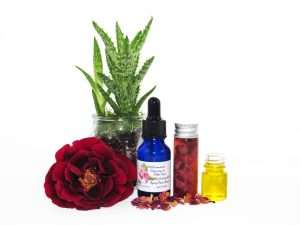
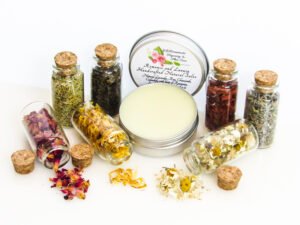
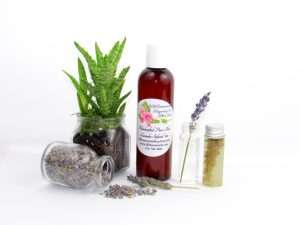
Explore the products crafted from the same ingredients and methods we discussed.
Start Your Journey Now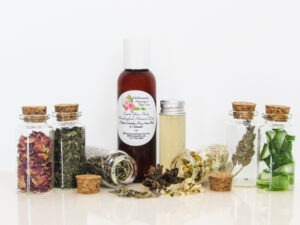
List of Discussions regarding Botanical Skincare