
Can Sugaring Lead to Permanent Hair Removal? The Science Explained | JBHomemade

🌿 Can Sugaring Lead to Permanent Hair Removal?

You've probably heard the promise: 'Permanent hair removal.' It's a bold claim tossed around by lasers, waxes, and even drugstore creams. But can sugaring lead to permanent hair removal? The answer is yes — when you understand the biology behind your hair growth cycles and practice consistency.

✨ The Honest Answer

Sugaring can lead to permanent hair reduction — and in some cases, complete permanency. But it's not a one-and-done miracle. Every body is unique. Hair types, follicle strength, hormone levels, and even your past hair removal methods all influence results.

Some people notice dramatic changes after just a few treatments. Others may need months or years of regular sugaring before follicles stop producing hair.

What does "permanent" really mean? In the context of sugaring, permanent hair reduction means:

  • Significantly fewer hairs growing back over time
  • Softer, finer, lighter regrowth that's barely noticeable
  • Bald patches where follicles have stopped producing hair entirely
  • Freedom from daily shaving or monthly waxing appointments

Think of sugaring as training your skin — teaching it, session by session, to release what no longer serves it.

🌙 Why the Hair Growth Cycle Matters for Permanent Hair Removal

Your hair isn't always in the same phase of growth. Each follicle moves through three distinct stages: Anagen (growth), Catagen (transition), and Telogen (rest). Understanding these phases is key to achieving permanent hair reduction with sugaring.

Sugaring works its deepest magic during the Anagen stage, when the hair is still actively anchored to the follicle wall. This is when removal has the greatest impact on long-term results.

🌱

Anagen

Active Growth Phase

🔄

Catagen

Transition Phase

😴

Telogen

Resting Phase
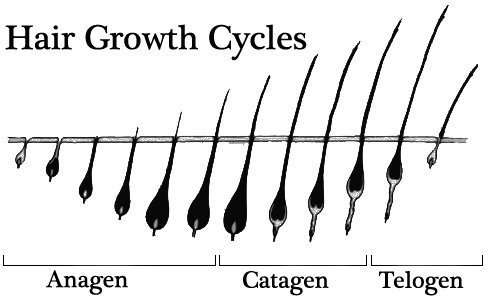
Hair growth cycle diagram showing Anagen, Catagen, and Telogen stages for sugaring effectiveness

The Three Stages Explained:

  • 🌱 Anagen (Active Growth): Hair is actively growing and firmly attached to the follicle wall. This is the optimal time for sugaring to weaken the follicle.
  • 🔄 Catagen (Transition): Hair has stopped growing and is beginning to detach from the follicle. Removal during this phase is less effective for permanency.
  • 😴 Telogen (Resting): Hair is completely detached and will soon fall out naturally. Removing hair in this phase does not weaken the follicle.

Only about 20-30% of your hair is in the Anagen stage at any given time. That's why consistent treatments every 3-4 weeks are essential — you're catching different hairs as they enter their growth phase.

According to the National Library of Medicine, understanding your hair growth cycle is essential for effective hair removal.

Body Sugaring Leads to Softer Skin Permanency Sparser hair-regrowth

How Sugaring Weakens Hair Follicles Over Time

Imagine the follicle wall as a brick wall. Each time hair is removed in the Anagen stage, it takes a few bricks with it. Over time, the wall weakens and may collapse — leaving the follicle unable to produce hair.

That's why sugaring is most effective when the hair is short — about 1/8 of an inch (just 2–3 days of growth). Catching it in the Anagen stage means the hair is still firmly rooted to the follicle wall.

Waiting too long (until the hair reaches 1/4 inch or more) means the hair has likely entered the Catagen stage. At this point, it has already begun detaching from the follicle wall, making permanent reduction less likely.

"Every time the hair is extracted in the Anagen stage of growth, it pulls a portion of bricks of the follicle wall with it. As the bricks are removed, the wall eventually collapses and becomes unable to produce hair."

— Chantalle Moerman, Sugarista & Educator

💧 Sugaring vs Waxing for Permanent Hair Reduction

Why does sugaring lead to permanent hair removal when waxing doesn't? It comes down to timing and technique.

🕯️ Traditional Waxing

  • × Demands longer hair growth (1/4–1/2 inch)
  • × Most hairs in Catagen stage by then
  • × Weaker connection, more breakage
  • × Broken hairs = regrowth & irritation
  • × Little chance of permanency

🍯 Natural Sugaring

  • Works with short hair (1/8 inch)
  • Targets hair in Anagen stage
  • Seeps into follicle like natural lubricant
  • Removes hair in natural growth direction
  • Weakens follicle over time

Sugaring grips the hair from the root without damaging living skin cells, and it removes hair in its natural direction of growth. That means fewer breakages, less pain, and more chance of weakening the follicle over time.

🔬 The Science Visualized

Scientific infographic explaining how sugaring leads to permanent hair reduction through follicle weakening and Sugaring technique infographic showing proper application and flick method for permanent hair reduction

🌿 Long-Term Results of Sugaring: Permanent Hair Reduction

With consistent sugaring treatments, you can expect to see progressive, permanent changes to your hair growth:

  • After 3-6 treatments: Hair grows back softer, finer, and lighter in color
  • After 6-12 treatments: Regrowth becomes patchy and sparse, with noticeable bald spots
  • After 12+ treatments: Many clients report complete permanency in certain areas — follicles have stopped producing hair entirely
  • Long-term maintenance: Even after achieving desired results, occasional touch-ups keep skin smooth
  • Hair grows back softer, finer, and lighter with each treatment
  • Over time, regrowth becomes patchy and sparse
  • Many clients report "bald patches" where follicles have stopped producing hair entirely
  • With consistent sugaring at the right stage, permanency is not just possible — it's probable

Patience is key. Just like tending a garden, consistency creates results. Your hair didn't grow overnight — and it won't disappear overnight either. But with sugaring, you're working with your body, not against it.

Many of my customers report that after a year of regular sugaring, they've reduced their treatments from every 3-4 weeks to every 2-3 months. Some areas stop growing hair completely.

Every time the hair is extracted in the Anagen stage of growth, it pulls a portion of bricks of the follicle wall with it. As the bricks are removed, the wall eventually collapses and becomes unable to produce hair.

— Chantalle Moerman, Sugarista & Educator

Common Questions About Sugaring and Permanent Hair Removal

How many sugaring treatments until hair stops growing?

Yes! Sugaring can lead to permanent hair reduction and, in some cases, complete permanency. By consistently removing hair during the Anagen (growth) stage, you gradually weaken the follicle wall until it can no longer produce hair.

How many sugaring treatments until hair stops growing?

Results vary by individual, but most people notice significant reduction after 6-12 treatments. Some areas may achieve complete permanency after 12-18 months of consistent sugaring every 3-4 weeks.

How often should I sugar for permanent results?

For best results, sugar every 3-4 weeks. This schedule ensures you're catching different hairs as they enter their Anagen growth phase. Consistency is key to achieving permanent hair reduction.

Is permanent hair removal with sugaring really permanent?

Yes — when follicles are sufficiently weakened, they stop producing hair entirely. However, hormonal changes (pregnancy, menopause, medications) can sometimes reactivate dormant follicles. Most clients experience lasting results that dramatically reduce or eliminate the need for regular hair removal.

🌟 Ready to Begin Your Sugaring Journey?

Sugaring isn't just hair removal — it's a ritual of renewal. Each treatment is an opportunity for smoother skin, softer regrowth, and eventually, true freedom from the cycle of shaving, waxing, and irritation.

🌿 Shop Sugaring Kits & Start Today